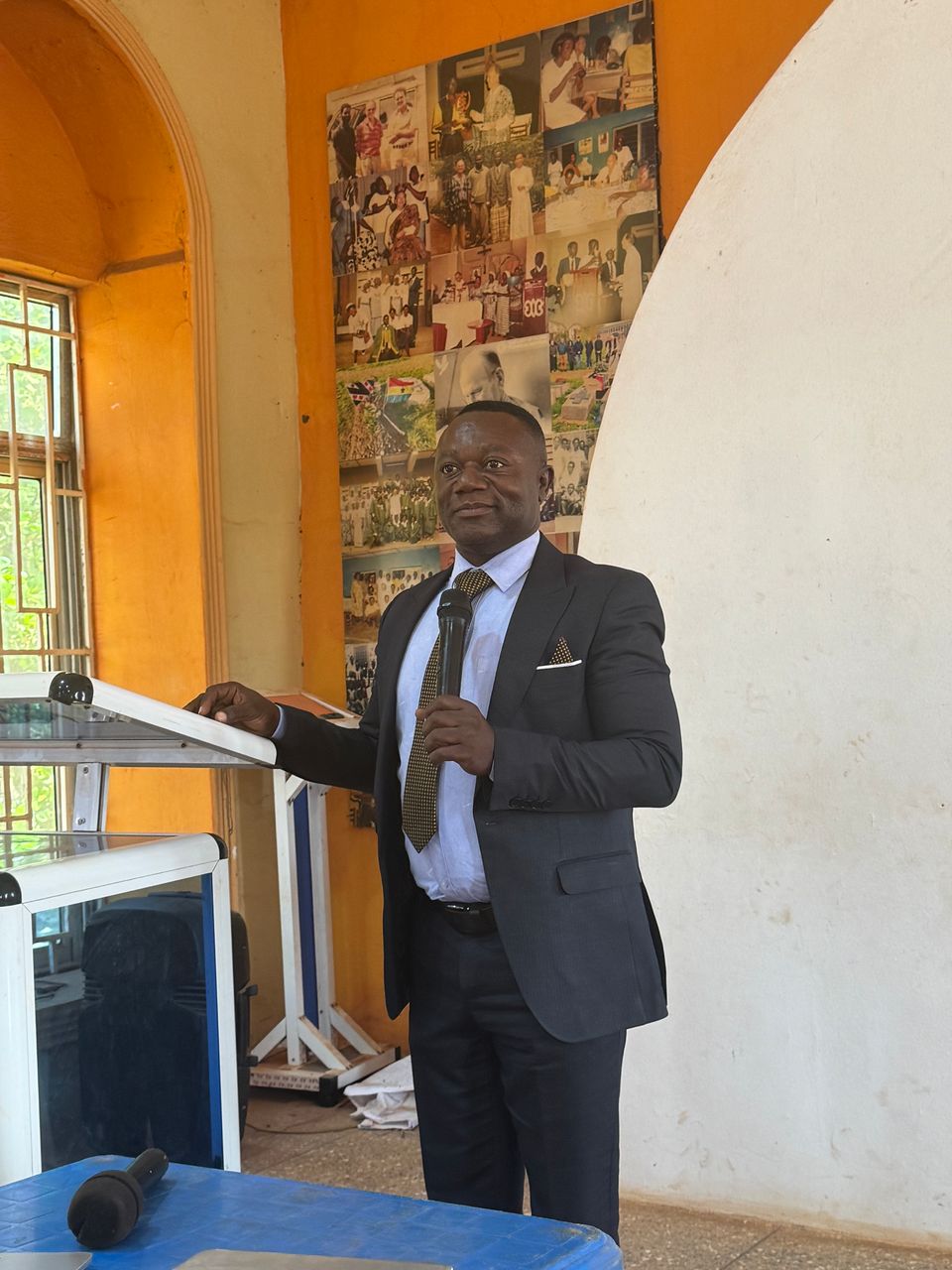

The Principal of the College of Nursing and Midwifery, Sampa, Mr. Albert Opoku, has chaired the Annual Performance Review Meeting of the Jaman North District Health Directorate, calling for strengthened accountability, data-driven decision-making, and enhanced collaboration to improve healthcare delivery in the district.
The high-level review meeting, held in the Bono Region, brought together the Jaman North District Director of Health Services, health professionals, development partners, members of the media, and other distinguished stakeholders within the health sector.
In his address, Mr. Opoku described the annual performance review not as a routine administrative exercise, but as a strategic moment of reflection and renewed commitment to the health and well-being of the people of Jaman North District. He emphasized that performance assessments must go beyond numbers and statistics to focus on measurable impact and sustainable improvement.
“It is said that what gets measured gets improved,” he noted, stressing that the purpose of the review was not to criticize, but to learn; not merely to present figures, but to evaluate outcomes; and not simply to identify gaps, but to design practical and forward-looking solutions.
He underscored the critical role of healthcare in national development, stating that a healthy population remains the backbone of a productive society. Quoting former United Nations Secretary-General Kofi Annan, Mr. Opoku reminded participants that “health is a human right and not a privilege to be purchased,” a principle that places responsibility on administrators, clinicians, educators, and policymakers alike.
The Chairman outlined key areas of focus for the review, including service delivery indicators, maternal and child health outcomes, disease control interventions, health financing systems, logistics management, and stakeholder collaboration. He reiterated that performance reviews in the health sector are essential tools for tracking progress, promoting transparency, strengthening accountability, and ultimately improving patient outcomes.
As head of a key health training institution within the district, Mr. Opoku reaffirmed the commitment of the College of Nursing and Midwifery, Sampa, to support the District Health Directorate. He explained that the college’s mandate goes beyond training competent nurses and midwives to producing professionals who are compassionate, ethical, and community-oriented. He further pledged the institution’s readiness to collaborate with the Directorate in research and publications to promote evidence-based practice across health facilities in the district.
Referencing the legacy of Florence Nightingale, he emphasized that excellence in healthcare requires discipline, integrity, and continuous learning. He acknowledged persistent health challenges in the district, including maternal mortality, teenage pregnancy, malaria, non-communicable diseases, and emerging public health threats, and called for innovation, teamwork, and data-informed strategies to address them.
Mr. Opoku urged stakeholders to recognize that behind every statistic is a human life—a mother, a child, and a family whose well-being depends on the effectiveness of the health system. He stressed that accountability in health governance is most crucial at the district level, where policies are translated into real services for communities.
He encouraged open discussions, honest presentations, and constructive recommendations during the review process, urging participants to celebrate achievements such as improvements in immunization coverage, skilled delivery rates, and disease surveillance systems, while candidly addressing areas requiring further strengthening.
Quoting guidance from the World Health Organization, he reminded participants that the ultimate goal of every health system is to improve people’s health, and called on all stakeholders to strengthen inter-facility collaboration, invest in staff capacity building, improve data quality and reporting systems, enhance community engagement, and promote professionalism and ethical practice.
He cautioned that the true impact of the review would be measured not by the quality of presentations, but by the actions taken afterward. “Reports must not gather dust on shelves. Recommendations must be translated into action. Plans must be monitored. Commitments must be fulfilled,” he emphasized.
In closing, Mr. Opoku expressed appreciation to the District Health Directorate for organizing the review and commended health workers across Jaman North District for their tireless service, often under challenging conditions. He pledged his full support in chairing the programme to a successful conclusion and called for unity, wisdom, and renewed dedication to delivering equitable and quality healthcare to all residents of the district.
The Annual Performance Review Meeting concluded with a shared commitment among stakeholders to strengthen partnerships and work collectively towards improved health outcomes in Jaman North District.