
The District Chief Executive (DCE) for Atwima Mponua, Mr. Issahaq Ibrahim, has expressed disappointment at the low turnout during last Friday’s monthly national sanitation exercise in Nyinahin, cautioning residents that non-compliance with sanitation directives will no longer be tolerated.
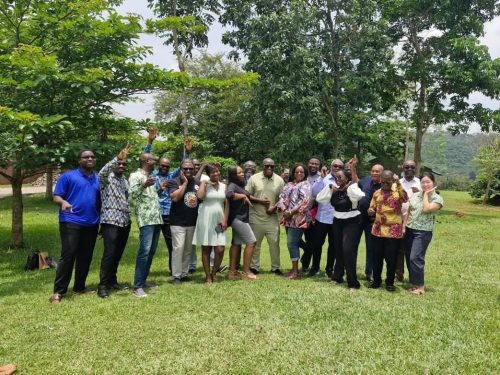
The exercise, which formed part of the government’s renewed effort to reintroduce the monthly clean-up campaign across the country, saw the participation of assembly members, opinion leaders, youth groups, and a few traders. However, officials noted that the level of community involvement was far below expectation.

DCE Disappointed in Traders’ Attitude
Addressing participants after the exercise, Mr. Ibrahim strongly criticized the attitude of many shop owners and petty traders who chose to remain indoors rather than join their colleagues in the communal clean-up. He described the behavior as selfish and counterproductive to the district’s goal of ensuring a clean and healthy environment.
“Too many of our traders refuse to participate. They sit in their shops while others sacrifice to clean. This attitude is unacceptable and will no longer be tolerated. From now on, anyone who refuses to comply will face the full rigors of the law. The law will work, and when it does, nobody will be spared—regardless of political affiliation or status,” he declared.
Sanitation as a Health and Survival Issue
The DCE emphasized that sanitation is not simply a civic responsibility but a matter of health and survival. He warned that poor sanitation has deadly consequences, including outbreaks of malaria, cholera, and other preventable diseases that continue to claim lives across Ghana.
“In our daily lives, we generate a lot of filth. If we fail to dispose of it, we put ourselves and our families in danger. Filth kills, and if we don’t fight filth, it will destroy us. This is a fight for our survival,” he cautioned.
Productivity and Development at Stake
Hon Ishaq Ibrahim further highlighted the connection between sanitation and development, noting that constant ill-health caused by poor environmental practices weakens the workforce, drains household resources, and hinders economic growth.
“A clean district attracts investors, reduces hospital bills, and keeps our people strong for productive work. If we want development in Atwima Mponua, we must start by keeping our surroundings clean,” he added.
Call for Collective Action
The DCE appealed to chiefs, assembly members, market women, religious groups, and the youth to take ownership of the sanitation initiative. He stressed that government alone cannot achieve sustainable results without the active involvement of the people.
“Cleanliness is not for the assembly alone, it is for all of us. If we want healthy people and a prosperous future, then everyone must participate. A clean environment is our shared responsibility,” he urged.
Rekindling a National Culture
The monthly sanitation exercise, first introduced under the late President John Evans Atta Mills but later abandoned, has been reintroduced by government to rekindle a nationwide culture of cleanliness.
In Atwima Mponua, officials say they will intensify public sensitization, step up law enforcement, and ensure that sanitation by-laws are fully applied to achieve better compliance in future exercises.
While acknowledging the modest efforts of those who participated, Mr. Ibrahim expressed disappointment at the overall turnout but remained hopeful that with education and enforcement, participation levels will improve.
“Sanitation is not optional—it is compulsory. It is about life and death. The choice is ours: to live in a clean and healthy district, or to be consumed by filth and sickness. I urge everyone to choose wisely,” he concluded.