

Traders at Bantama and the Race-Course Market have once again come under scrutiny for allegedly defying a city-wide sanitation exercise organised by the Kumasi Metropolitan Assembly (KMA), despite repeated public announcements and prior notice.

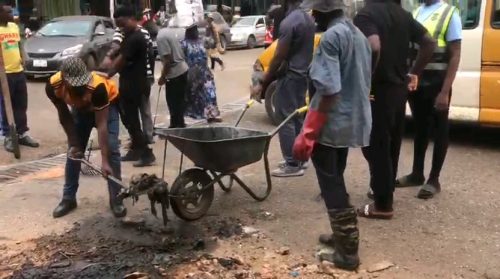
The incident occurred during a scheduled clean-up exercise across Kumasi on Saturday, reigniting debate over civic responsibility and adherence to sanitation directives in the Ashanti Regional capital. While city authorities, sanitation workers and heavy-duty equipment were actively engaged in desilting choked gutters and clearing accumulated refuse, a significant number of traders in Bantama were reportedly seen conducting business as usual.

Eyewitnesses indicated that although some traders initially continued their commercial activities, they reportedly switched to participating in the clean-up only upon the arrival of the Mayor and the Regional Minister. The gesture, observers say, appeared more symbolic than genuine, as trading activities had persisted for a considerable period during the exercise.

Their actions are likely to incur the displeasure of city authorities, who have on several occasions cautioned traders to comply with sanitation directives and maintain clean trading environments.
According to sources within the Assembly, multiple public announcements were made ahead of the exercise, directing traders and residents to suspend commercial activities and fully participate in the clean-up effort. The sanitation drive forms part of KMA’s broader strategy to improve environmental cleanliness, prevent perennial flooding, and reduce the risk of sanitation-related diseases within the metropolis.

However, scenes from the Bantama and Race-Course areas painted a contrasting picture. As excavators scooped silt from clogged drains and sanitation teams cleared debris from streets and market spaces, sections of the trading community appeared largely indifferent to the exercise. Some traders continued buying and selling, seemingly unfazed by the official directive.

City officials have described the development as a “growing trend of disregard” for sanitation regulations in parts of the metropolis. They argue that such non-compliance undermines ongoing efforts to preserve Kumasi’s reputation as one of Ghana’s leading commercial and cultural hubs.

“It is disheartening,” one official noted, “to see authorities and even the Mayor personally involved in sweeping and desilting gutters, while some of the very individuals whose activities contribute significantly to the waste situation remain uncooperative.”

Images of the Mayor participating in previous clean-up campaigns have frequently circulated on social media, projecting a message of leadership by example. Yet, the recurring non-compliance in certain markets has raised critical questions about enforcement mechanisms, stakeholder engagement, and the sustainability of periodic sanitation exercises.

Some traders, however, privately contend that frequent interruptions to business activities carry serious financial implications. In an already challenging economic climate, market days represent critical opportunities for income generation, and even a temporary halt in operations can significantly affect daily earnings and household sustenance.

Sanitation continues to pose a major urban challenge for many rapidly expanding cities, and Kumasi is no exception. Blocked gutters significantly contribute to flooding during the rainy season, while poor waste management heightens the risk of cholera and other sanitation-related diseases.

Over the years, the Kumasi Metropolitan Assembly has intensified public education campaigns and community clean-up initiatives, emphasising shared responsibility between authorities and residents. The Assembly’s vision of a cleaner, healthier and more orderly metropolis, however, hinges largely on cooperation from all stakeholders—particularly market traders whose activities generate substantial daily waste.
Urban development observers maintain that without consistent participation and firm enforcement of sanitation bylaws, such exercises may produce only short-term improvements. Sustainable cleanliness, they argue, requires behavioural change, strict adherence to market regulations, effective waste management systems, and continuous public sensitisation.

The latest developments in Bantama have therefore prompted renewed calls for stronger enforcement measures. While some residents advocate sanctions against non-compliant traders as a deterrent, others favour intensified dialogue and stakeholder engagement to foster voluntary compliance.

As Kumasi continues to grow as a commercial nerve centre in Ghana, the responsibility for maintaining a clean and healthy environment cannot rest solely on city authorities. Collective action involving traders, transport operators, residents and local leaders remains essential.

For the Kumasi Metropolitan Assembly, the challenge now lies in striking a delicate balance between enforcement and engagement—ensuring that sanitation consciousness becomes an ingrained civic culture rather than a response limited to scheduled exercises. Until that balance is firmly achieved, the aspiration of a consistently clean Kumasi may remain a work in progress.