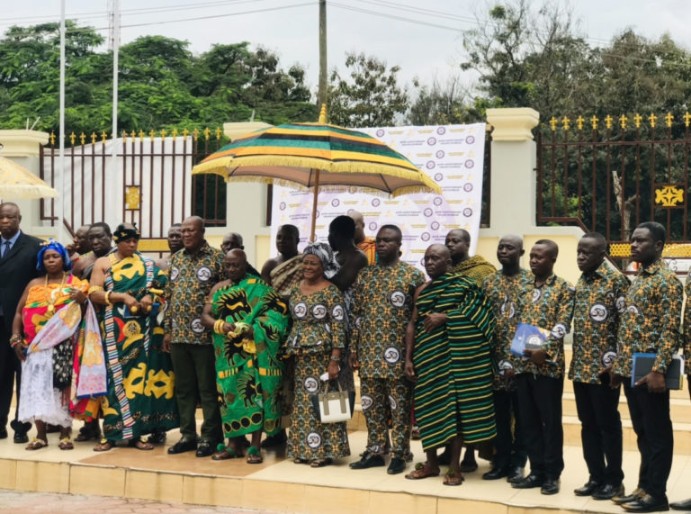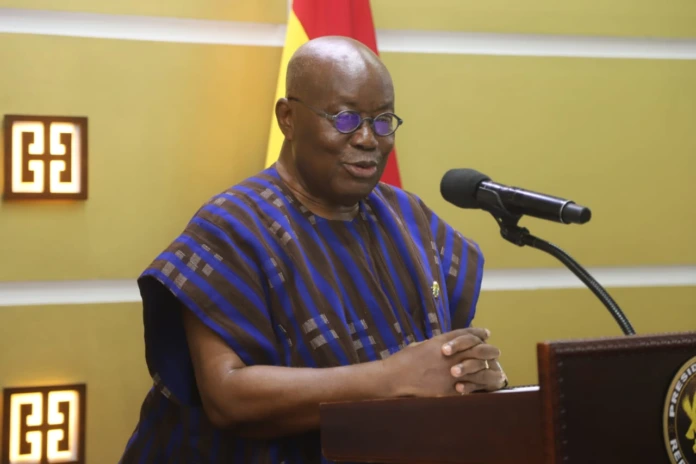

The Manso Nkwanta Manhene, Nana Bi-Kusi Appiah, in collaboration with the District Chief Executive (DCE) for the Amansie West District, Hon. Prince Manu Morris, has commissioned an ultra-modern divisional palace for the Chief of Akataniase, Obrempong Nana Owusu Ababio III, in a colourful ceremony marked by rich cultural display and renewed calls for development.

The commissioning ceremony, which attracted chiefs, queen mothers, assembly members, opinion leaders and residents from Akataniase and neighbouring communities, marked a significant milestone in the traditional and administrative history of the area. The newly constructed palace is expected to serve as the official seat of the Akataniase Divisional Council, as well as a centre for cultural preservation, peaceful dispute resolution and effective traditional governance.

Addressing the gathering, Obrempong Nana Owusu Ababio III expressed profound gratitude to the Manso Nkwanta Traditional Council, the Amansie West District Assembly and all individuals who contributed in diverse ways to the successful completion of the project. He described the palace as a symbol of unity, authority and progress, noting that it will strengthen traditional leadership and enhance its role in championing development at the grassroots level.

The Akataniase chief used the occasion to highlight the pressing development challenges facing the community, particularly the poor state of road infrastructure. He lamented that the absence of motorable roads continues to hamper socio-economic activities, restrict access to education and healthcare, and discourage investment in the area. Nana Owusu Ababio III appealed to government and relevant agencies to prioritise Akataniase in ongoing and future road projects, stressing that the community deserves the same level of development enjoyed by other parts of Ghana.

He further disclosed that Akataniase lacks a modern water closet (WC) toilet facility, a situation he said poses serious public health and sanitation challenges. The chief therefore appealed to government, philanthropists, and residents both home and abroad to support efforts to construct a modern toilet facility for the community to improve hygiene and public health.

Nana Owusu Ababio III also encouraged fellow chiefs who are yet to construct palaces for their stools to take inspiration from the Akataniase initiative, describing a functional palace as an important symbol of traditional authority and a vital platform for community development.

In his remarks, the Manso Nkwanta Manhene, Nana Bi-Kusi Appiah, commended Obrempong Nana Owusu Ababio III for his vision, foresight and commitment to strengthening traditional leadership. He described the construction of the palace as a clear demonstration of responsible and forward-looking leadership, and linked the initiative to the broader vision of the Asantehene, Otumfuo Osei Tutu II, which underscores the importance of strong traditional institutions in driving sustainable development.

Nana Bi-Kusi Appiah urged the people of Akataniase to rally behind their chief and the divisional council, emphasising that unity, discipline and communal support are critical ingredients for development. He encouraged residents to actively participate in communal labour, respect traditional authority and support initiatives aimed at improving living conditions in the community.

The District Chief Executive, Hon. Prince Manu Morris, in his address, assured the gathering of the Assembly’s commitment to working closely with traditional authorities to promote development across the district. He acknowledged the concerns raised by the Akataniase chief and indicated that the Assembly would continue to engage relevant stakeholders to address critical needs, including road infrastructure and other essential social amenities.

The ceremony was characterised by traditional drumming and dancing, libation and the presence of neighbouring chiefs, underscoring the cultural significance of the occasion. Residents expressed optimism that the commissioning of the ultra-modern palace would not only strengthen traditional governance but also draw attention to the development needs of Akataniase.

The new palace stands as a symbol of progress and renewed commitment to development, reinforcing the vital role of traditional leadership in complementing government efforts to improve the lives of people in rural communities.