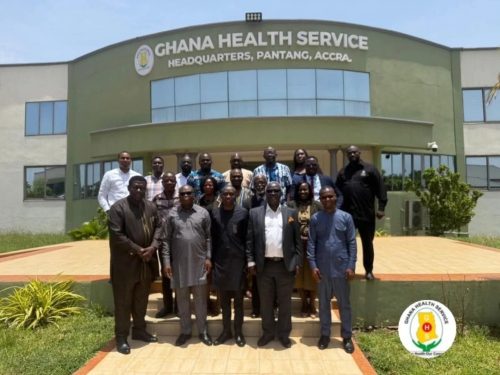

The Ghana Health Service has held a Joint Annual Performance Review Meeting aimed at strengthening the country’s response to three major public health threats—HIV, Tuberculosis and Malaria.

The meeting, held under the theme “Strategic Reprioritization for Maximum Impact,” brought together key stakeholders from the National AIDS Control Programme, the National Tuberculosis Programme, and the National Malaria Elimination Programme, along with development partners and health sector actors, to review the performance of the three programmes and discuss strategies to improve their effectiveness.

The review meeting provided a crucial platform for participants to reflect on the progress made in the national fight against HIV, tuberculosis and malaria over the past year, while also identifying gaps and emerging challenges that require urgent attention. Discussions focused on strengthening collaboration among the various programmes and stakeholders, improving resource mobilization and utilisation, and enhancing the delivery of essential health services to communities across the country.

Participants also examined data on programme performance, service coverage, and the impact of ongoing interventions, with the aim of informing future policy directions and operational strategies. The meeting emphasized the need for innovative approaches, stronger partnerships, and more coordinated efforts to sustain the gains achieved so far in controlling the three diseases.

Officials stressed that despite significant progress made in recent years, HIV, tuberculosis and malaria continue to pose serious public health challenges in Ghana. As a result, stakeholders underscored the importance of strategic planning, efficient resource management, and strengthened health systems to ensure that prevention, treatment, and care services reach those who need them most.

The Joint Annual Performance Review Meeting forms part of ongoing national efforts by the Ghana Health Service and its partners to evaluate programme outcomes, improve accountability, and accelerate progress toward eliminating HIV, tuberculosis and malaria as major public health threats in Ghana.