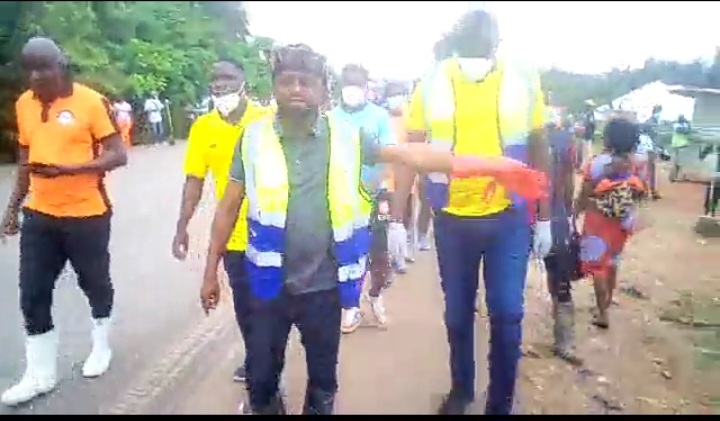
The District Chief Executive (DCE) for Atwima Mponua, Mr. Issahaq Ibrahim, has underscored the direct connection between sanitation, public health, and socio-economic development, urging residents to fully participate in the reintroduced monthly national sanitation exercise.
Speaking in Nyinahin after leading last Friday’s clean-up exercise, Mr. Ibrahim emphasized that sanitation is more than just a civic duty—it is a critical foundation for healthy living, productivity, and long-term development.
Sanitation as a Driver of Development
The DCE noted that communities with poor sanitation often suffer from frequent disease outbreaks, which weaken the workforce, drain household incomes, and reduce overall productivity. According to him, an unhealthy population cannot contribute effectively to national progress.
“A clean environment means healthy people, and healthy people mean a prosperous district. When we are constantly sick from diseases like cholera, malaria, and typhoid, our energy is wasted in hospital queues instead of productive work. Sanitation is the bedrock of development,” Mr. Ibrahim stressed.
He added that cleaner communities also attract investors and businesses, as no serious entrepreneur would want to operate in a dirty and disease-prone environment.
Traders Cautioned Against Indifference
Mr. Ibrahim expressed disappointment at the attitude of many shop owners and petty traders, particularly those operating along the main roads, who deliberately refuse to participate in clean-up exercises. He warned that their indifference undermines the communal effort to keep towns and villages clean.
“Too many traders prefer to sit in their shops while others work. Some even operate without permits, yet they disrespect authorities when sanitation enforcement is carried out. Let me be clear: from now on, the by-laws will work, and when they do, nobody will be spared regardless of political affiliation,” he declared.
Sanitation as a Life-or-Death Matter
The DCE further cautioned residents against underestimating the dangers of poor sanitation. He reminded the community that waste mismanagement not only damages the environment but also causes life-threatening diseases.
“In our daily lives we generate filth, and if we fail to manage it, we are writing our own death sentence. Filth kills, and if we don’t fight it, it will destroy us and our children,” he warned.
Call for Collective Action
Hon Ishaq Ibrahim appealed to chiefs, community leaders, youth groups, market women, and religious institutions to actively support and mobilize residents for the monthly clean-up exercises. He stressed that government alone cannot achieve the desired results without active communal responsibility.
“Keeping our environment clean is not just the business of government or assemblies. It is for all of us. If we want healthy people and a prosperous future, then everyone must get involved,” he urged.
Reviving a National Culture
The monthly sanitation exercise, which was first introduced under the late President John Evans Atta Mills but later abandoned, has been reintroduced by the government to rekindle Ghana’s national culture of cleanliness.
In Atwima Mponua, the exercise in Nyinahin saw the participation of assembly members, opinion leaders, some traders, and youth groups. Though turnout fell below expectation, authorities assured that continuous community sensitization and strict enforcement of sanitation by-laws will improve participation in the months ahead.
Mr. Ibrahim concluded with a strong message that sanitation is not a one-day activity but a lifestyle that must be embraced by every resident.
“When we clean our surroundings, we protect our health, we protect our children, and we prepare the way for development. A clean environment gives us dignity, confidence, and progress. This is why I say, clean environment, healthy people, prosperous district,” he concluded.