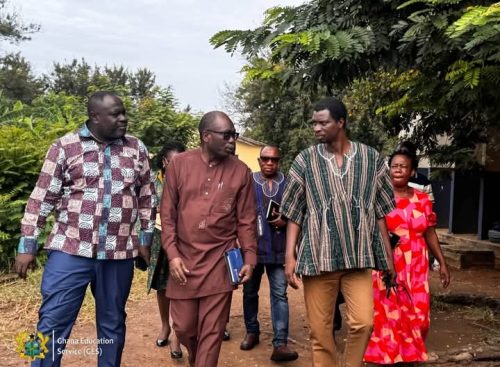

The District Chief Executive (DCE) for Atwima Mponua, Hon. Issahaq Ibrahim, has appealed to traditional leaders, market women, traders, religious institutions, and youth groups to fully support the reintroduced monthly national sanitation exercise, stressing that collective responsibility is the only path to building a healthy and prosperous district.

Speaking at Nyinahin after leading last Friday’s clean-up campaign, Hon. Ibrahim noted that sanitation is not merely a civic obligation but a critical necessity for survival, productivity, and long-term development.
Chiefs and Community Leaders Key to Success
The DCE underscored the role of traditional rulers and opinion leaders in mobilizing communities, saying their active involvement would inspire greater participation from the grassroots.
“Chiefs are the custodians of our land and culture. When they speak, the people listen. I am therefore appealing to our chiefs and opinion leaders to champion this exercise in their towns and villages. Together, we can make Atwima Mponua a model district for cleanliness,” Hon. Ibrahim said.
Traders and Market Women Cautioned
Hon. Ibrahim expressed concern over the reluctance of some traders and shop owners, particularly those along the main streets, who often fail to join clean-up activities. He revealed that many operate without proper permits yet resist authority when sanitation by-laws are enforced.
“This attitude undermines the collective good. From now on, let me assure you that the law will work without fear or favor. Nobody will be spared—whether trader, farmer, or politician—if they refuse to comply with sanitation regulations,” the DCE warned.
Sanitation as a Health and Development Priority
The DCE emphasized that poor sanitation remains one of the leading causes of preventable diseases such as malaria, cholera, and typhoid, which weaken the workforce and drain household finances.
“In our daily lives we generate a lot of filth. If we do not clean it up, it will turn against us. Filth kills, it brings sickness, and if we don’t deal with it, it will put us in the grave. A clean environment is a healthy environment, and a healthy people mean a productive and prosperous district,” Hon. Ibrahim cautioned.
He explained that sanitation is directly tied to development, as no serious investor would be attracted to communities plagued by filth and poor hygiene.
Youth and Religious Bodies Urged to Take Ownership
Hon. Ibrahim also called on the youth to be at the forefront of the initiative, noting that their energy and influence could help drive change across communities. He further encouraged churches, mosques, and other faith-based groups to use their platforms to promote cleanliness as both a civic and spiritual responsibility.
“Sanitation is not only for government; it is for all of us. Our youth must lead with energy, our churches and mosques must preach it as part of good living, and our traders must embrace it as part of their business. When we come together, no challenge will defeat us,” he said.
Rekindling a National Culture of Cleanliness
The monthly sanitation exercise, first introduced under the late President John Evans Atta Mills but later abandoned, has been reintroduced to rekindle Ghana’s long-standing tradition of communal environmental responsibility.
In Atwima Mponua, the Nyinahin exercise saw participation from assembly members, some traders, youth groups, and opinion leaders, though turnout was still below expectation. Authorities have since pledged to intensify community sensitization and strictly enforce sanitation by-laws to ensure stronger participation in future exercises.
Hon. Ibrahim concluded by reaffirming his commitment to making sanitation a priority in the district.
“Keeping our surroundings clean is not for government alone—it is for us, our children, and our future. If we want to live long, stay healthy, and prosper, then we must all support this initiative wholeheartedly,” he stated.