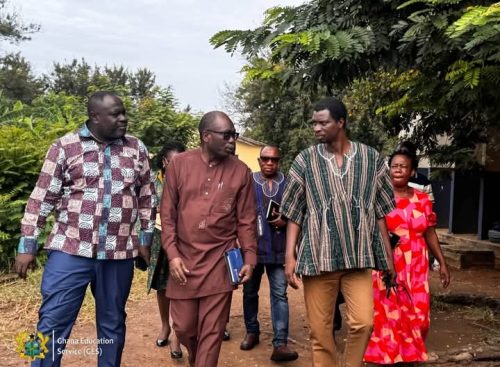

The District Chief Executive (DCE) for Atwima Mponua, Hon. Issahaq Ibrahim, has underscored the critical connection between sanitation, public health, and economic development, warning residents that a failure to prioritize cleanliness will undermine the district’s long-term prosperity.
Hon. Ibrahim made the remarks in Nyinahin last Friday after leading the monthly national sanitation exercise, which brought together assembly members, youth groups, opinion leaders, and some traders. The initiative forms part of the reintroduced National Sanitation Day directive by President John Dramani Mahama.
Sanitation as a Public Health Imperative
The DCE explained that poor sanitation is the breeding ground for preventable diseases such as cholera, malaria, and typhoid, which claim lives, drain household incomes, and reduce productivity.

“In our daily lives, we generate waste. If we don’t clean it, it will kill us. Filth brings sickness, and if we don’t tackle it, it will take us to the grave. That is why I keep stressing that sanitation is not just about cleanliness—it is about survival,” Hon. Ibrahim emphasized.
He cautioned that frequent illness weakens families and lowers productivity in farms, markets, and workplaces, ultimately stalling development across the district.
Traders and Shop Owners Warned
Hon. Ibrahim expressed concern about the reluctance of some traders and shop owners, especially those along the main streets, who often fail to participate in communal cleaning. He condemned the attitude of those who ignore civic responsibilities while operating businesses without proper permits.
“This attitude undermines our collective goal of building clean, safe, and productive communities. From now on, the law will work, and nobody—whether trader or politician—will be exempt. Sanitation laws will be enforced without fear or favor,” the DCE warned.
Collective Effort for Cleaner Communities
Hon. Ibrahim reminded residents that government alone cannot achieve cleanliness without the cooperation of citizens. He therefore called on chiefs, assembly members, market women, religious leaders, and youth groups to take ownership of the exercise.
“Keeping our surroundings clean is not just for government; it is for us, our children, and our future. If we want to live long, stay healthy, and prosper as a district, then every single resident must play a role,” he urged.
Sanitation as a Driver of Development
The DCE emphasized that sanitation goes beyond health to impact socio-economic growth. He explained that clean communities attract investors, create jobs, and improve living standards, while filthy environments repel development and increase poverty levels.
“A clean district is an attractive district. No investor will bring money into a place choked with filth. But if we keep Atwima Mponua clean, we will not only enjoy good health but also attract the development that our people deserve,” Hon. Ibrahim stressed.
Rekindling a National Culture of Cleanliness
The monthly National Sanitation Day, first introduced under the late President John Evans Atta Mills but later abandoned, has now been revived to rekindle Ghana’s communal spirit of environmental cleanliness.
Although turnout for the Nyinahin exercise fell below expectations, officials remain optimistic that continuous sensitization, combined with strict law enforcement, will significantly boost participation in the months ahead.
A Call to Action
Hon. Ibrahim concluded with a passionate appeal for residents to embrace sanitation as a shared responsibility that holds the key to Atwima Mponua’s health and future prosperity.
“Sanitation is directly linked to our survival and success as a district. When we are healthy, we are productive; when we are productive, we prosper. Let us all join hands to keep Atwima Mponua clean for ourselves, our children, and generations to come,” he said.