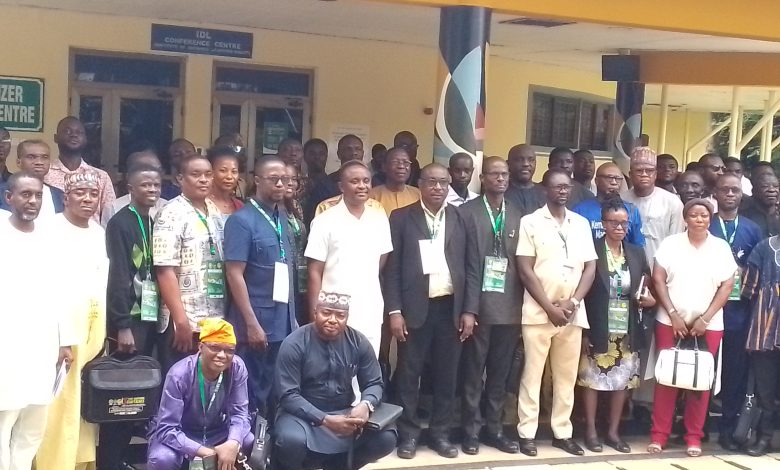
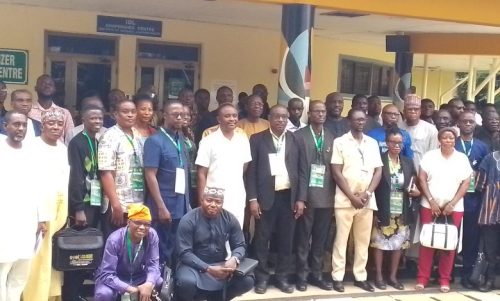
The future of Ghana’s livestock sector came under the spotlight in Kumasi as the Ghana Animal Science Association Production (GSAP) and the Ghana Animal Science Association (GASA) jointly held their 3rd annual conference. The gathering highlighted Artificial Intelligence (AI) as a game-changer for poultry, cattle production, and the transparency of agricultural value chains.
The event, themed “The Role of Animal Agriculture in National Development in an Era of Artificial Intelligence,” brought together researchers, policymakers, agribusiness leaders, farmers, and students to examine how AI can reshape livestock production and strengthen national food systems.
In his keynote presentation, Professor Nana Awusi-Mensah, Vice Dean of the Faculty of Agriculture at the Kwame Nkrumah University of Science and Technology (KNUST), stressed that AI is no longer a distant prospect but a present-day necessity. He explained that AI can forecast poultry diseases, optimize cattle feeding patterns, improve land and water management, and promote fairer value chains for smallholder farmers.
“Artificial Intelligence can transform animal agriculture into a more impactful, efficient, and sustainable industry. To achieve this, stakeholders must collaborate and commit to applying AI solutions on the ground,” Prof. Awusi-Mensah said.
Professor Dadson Awunyo-Vitor, Provost of the College of Agriculture and Natural Resources at KNUST, also addressed the gathering, describing the conference as a turning point for Ghana’s agriculture. He noted that the meeting explored technologies such as disease forecasting tools, feed optimization systems, and the integration of blockchain and Internet of Things (IoT) platforms for greater transparency and trust in value chains.
Prof. Awunyo-Vitor projected a future where Ghana develops its own AI solutions tailored to the realities of its farmers and production systems. “Our vision must be to harness AI not just for efficiency, but for inclusive, sustainable, and resilient livestock production,” he emphasized.
Participants at the conference agreed that combining traditional animal husbandry practices with AI-driven innovations could unlock new opportunities for productivity and growth. Farmers, researchers, and agribusiness leaders expressed optimism that these tools could address longstanding challenges, including disease outbreaks, poor yields, and inequitable pricing in value chains.
The 3rd Joint GSAP-GASA Conference reaffirmed the importance of embracing digital transformation in agriculture, positioning AI as a vital driver for livestock development, national food security, and Ghana’s competitiveness in the global agricultural market.