
The District Chief Executive (DCE) for Atwima Mponua, Mr. Issahaq Ibrahim, has vowed to strictly enforce sanitation by-laws in the district following the reintroduction of the monthly national sanitation exercise, warning that offenders will not be spared regardless of political affiliation or social standing.
Mr. Ibrahim gave the assurance when he led last Friday’s clean-up exercise in Nyinahin, the district capital, as part of the national directive to rekindle communal participation in environmental cleanliness.
Enforcement Without Compromise
The DCE expressed frustration over the continued reluctance of some residents, particularly shop owners and petty traders, to take part in clean-up exercises. He said many of them prefer to stay indoors while a few dedicated residents and youth groups clean the community, a practice he described as undermining the collective goal of a healthier environment.
“Let me stress this clearly: those who fail to comply with the new sanitation directive will face the full rigors of the law without fear or favor. It is not me who will force the law—the law itself will work, and when it does, no one will be spared, regardless of political affiliation,” he declared.
Sanitation as a Public Health Priority
Mr. Ibrahim emphasized that sanitation is not only a civic duty but also a life-saving measure. He warned that poor environmental practices are directly linked to outbreaks of diseases such as cholera, malaria, and typhoid, which can lead to premature deaths and drain both families and the nation of critical resources.
“In our daily lives, we generate a lot of filth, and we must ensure that we get rid of it properly. Filth kills, it brings sickness, and if we don’t clean our environment, it will end us in the grave,” he cautioned.
He further noted that poor sanitation has a direct impact on productivity, since frequent illness reduces manpower and increases household medical expenses.
Call for Communal Responsibility
The DCE appealed to community leaders, traditional authorities, youth associations, market women, and religious institutions to throw their full support behind the initiative. According to him, a clean environment should not be seen as the responsibility of government or assemblies alone, but a shared obligation that benefits all.

“Keeping our surroundings clean is for us, our children, and our future. A clean environment means a healthy people, and a healthy people means a prosperous district,” Mr. Ibrahim emphasized.
Reviving a National Culture
The reintroduction of the monthly sanitation exercise, which was first introduced under the late President John Evans Atta Mills but later abandoned, is part of government’s renewed efforts to instill a culture of environmental cleanliness and improve public health nationwide.
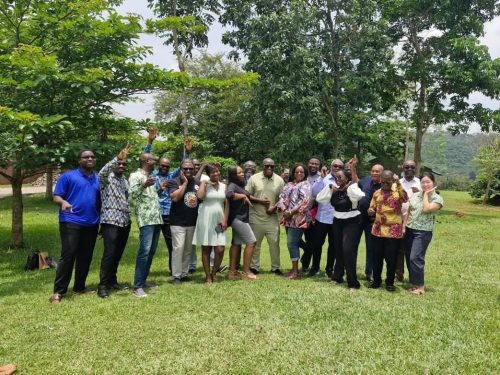
In Atwima Mponua, Friday’s exercise saw participation from assembly members, opinion leaders, youth groups, and some traders, though officials noted turnout was still below expectation. Authorities have since promised to intensify education and public sensitization while deploying stronger enforcement measures in the coming months.
Mr. Ibrahim Ishaq expressed optimism that consistent education, coupled with strict adherence to sanitation laws, would help transform the district into a cleaner, healthier, and more attractive place for both residents and investors.
“Sanitation is not optional. It is compulsory. And as DCE, I will ensure that the by-laws are enforced to the letter. Together, we can build a district where health, productivity, and development thrive on the foundation of a clean environment,” he concluded.