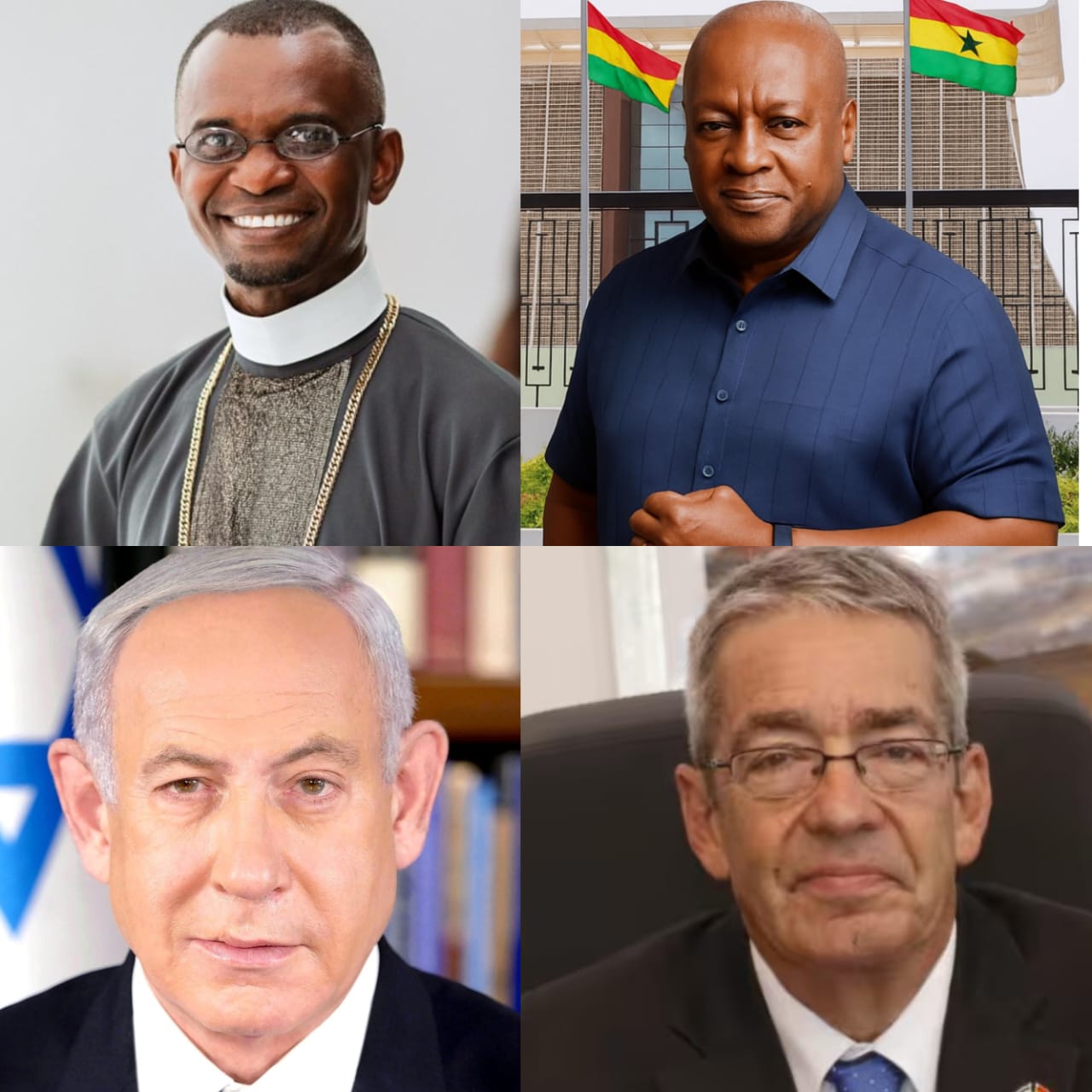
At the United Nations General Assembly in New York, former President John Dramani Mahama’s defence of the Palestinian people against Israel has ignited a storm of criticism across Ghana’s religious and civic community. His remarks, delivered in sympathy with Gaza, have been condemned as both politically reckless and spiritually perilous, with many arguing that they amount to a betrayal of Ghana’s prophetic destiny.
Rev. Emmanuel Boachie, Country Director of AWSOME Bible College and President of the Centre for Biblical-Historical Christianity Defence, described Mahama’s comments as a dangerous departure from truth. He accused the former president of pursuing international applause at the expense of Ghana’s future, insisting that his position reflects not the collective will of Ghanaians but a personal quest for political correctness. To send aid and weep for Palestinians without demanding the release of Israeli hostages, he argued, was not only dishonest but also a blatant act of ingratitude toward a nation that has blessed Ghana in countless ways.
Israel, he stressed, has been a partner in agriculture, health, education, security, and diplomacy. To turn against her now, when the nation is under siege, is to spit upon the very hand that has uplifted Ghana. This ingratitude, he warned, invites divine disapproval. He also condemned South African President Cyril Ramaphosa for siding with Hamas at global platforms, describing such alliances as complicity with terrorism and a dangerous distortion of justice.
The Christian community has rooted its warnings in scripture. They point to Genesis 12:3, which proclaims God’s covenant to bless those who bless Israel and curse those who curse her, and Psalm 33:12, which affirms that a nation aligned with God will prosper. These texts, they say, are not abstract promises but spiritual laws confirmed by history. Pharaoh, Haman, Titus, and Hitler all paid the ultimate price for their hostility toward Israel, while nations and leaders who defended her reaped blessings and prosperity.
Ghana’s own history, critics argue, bears this out. The political choices of successive governments have demonstrated a prophetic pattern. Periods of hostility towards Israel coincided with famine, economic downturns, corruption scandals, and humiliating electoral defeats. In contrast, moments of cooperation and friendship brought growth, debt relief, social stability, and international respect. For those who see Ghana’s story through the lens of divine covenant, the evidence is undeniable: when Ghana aligns with Israel, she rises; when she turns against her, she falls.
Beyond the spiritual dimension, advocates of Israel point to international law as justification for her actions. Under Article 51 of the UN Charter, every state has the inherent right to self-defence. The Fourth Geneva Convention forbids hostage-taking, while the Hostages Convention of 1979 obligates nations to punish terrorism rather than protect it. To equate Israel’s defensive operations with the crimes of Hamas, critics argue, is a distortion of justice and a violation of the very principles that the United Nations was created to uphold.
Rev. Boachie did not mince words in issuing a stern warning to Ghana’s leadership. He declared that any government aligning itself with antisemitic propaganda and turning against Israel will invite economic collapse, natural and social disasters, political disgrace, and electoral humiliation. In his view, President Mahama has set Ghana on a path that will not bring favour but shame. The prophetic choice before the nation is stark: to stand with Israel and secure a blessing, or to stand against her and fall under the curse of history.
As the dust settles from the UN Assembly, the question lingers over Ghana’s political and spiritual future. Will the nation follow leaders who prioritise international applause and political correctness, or will it reaffirm its prophetic alignment with Israel and embrace the blessings promised in scripture? For many in the faith community, the answer is urgent and unambiguous. Ghana’s destiny, they believe, is bound to Israel’s, and to oppose her is to oppose God Himself.
Contact: Rev. Emmanuel Boachie
Country Director, AWSOME Bible College
President, Centre for Biblical-Historical Christianity Defence
Head Pastor, Souls’ Pasture Church
+233 240 375 959
reveb2017@gmail.com