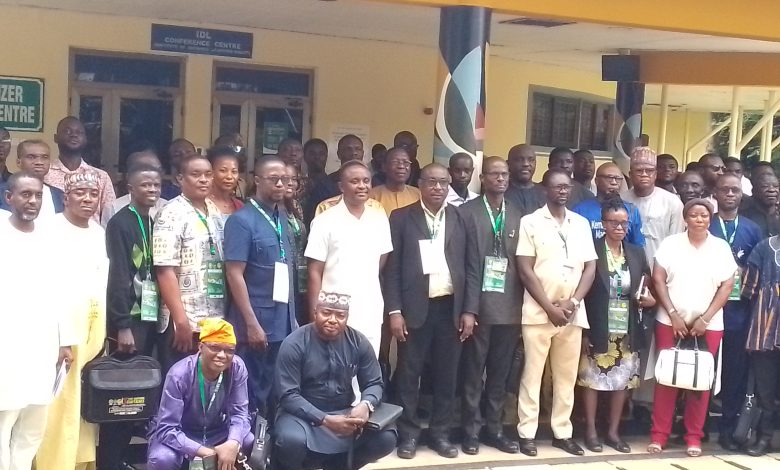
Kumasi became the hub of agricultural innovation as the Ghana Animal Science Association Production (GSAP) and the Ghana Animal Science Association (GASA) jointly hosted their 3rd annual conference, shining the spotlight on Artificial Intelligence (AI) as a transformative force for Ghana’s livestock sector.
Held under the theme “The Role of Animal Agriculture in National Development in an Era of Artificial Intelligence,” the event brought together leading academics, policymakers, farmers, agribusiness leaders, and students to deliberate on how digital technologies can enhance food security, strengthen value chains, and drive national development.
In his keynote address, Professor Nana Awusi-Mensah, Vice Dean of the Faculty of Agriculture at the Kwame Nkrumah University of Science and Technology (KNUST), emphasized that AI has the potential to revolutionize animal agriculture. He explained that AI-driven systems can accurately predict disease outbreaks in poultry, optimize cattle feed, promote efficient use of land and water, and create equitable value chains for smallholder farmers.
“Artificial Intelligence presents a timely opportunity for us to rethink and reshape livestock production in ways that make it more impactful, efficient, and sustainable,” Prof. Awusi-Mensah stated. He called for strong partnerships among researchers, policymakers, and the private sector to develop practical AI applications that directly benefit farmers.
Professor Dadson Awunyo-Vitor, Provost of the College of Agriculture and Natural Resources at KNUST, described the conference as a historic moment where traditional animal agriculture meets the possibilities of AI-driven solutions. He highlighted discussions on advanced tools such as disease forecasting models, feed optimization technologies, and the integration of Internet of Things (IoT) and blockchain systems for enhanced transparency in value chains.
Prof. Awunyo-Vitor further envisioned a future where Ghana leads in developing homegrown AI innovations tailored to local challenges. “For agriculture to remain resilient and inclusive, we must embrace bold thinking, realistic planning, and wise action in deploying AI technologies,” he urged.
The conference underscored a growing consensus that blending traditional livestock practices with modern AI solutions can provide Ghana with a competitive edge in food production. Stakeholders agreed that the effective integration of AI will not only boost productivity but also strengthen sustainability, fairness, and resilience in the animal agriculture sector.
As Ghana faces rising food demands and global competition, the deliberations in Kumasi positioned the GSAP-GASA conference as a critical platform shaping the future of agricultural innovation in the country.